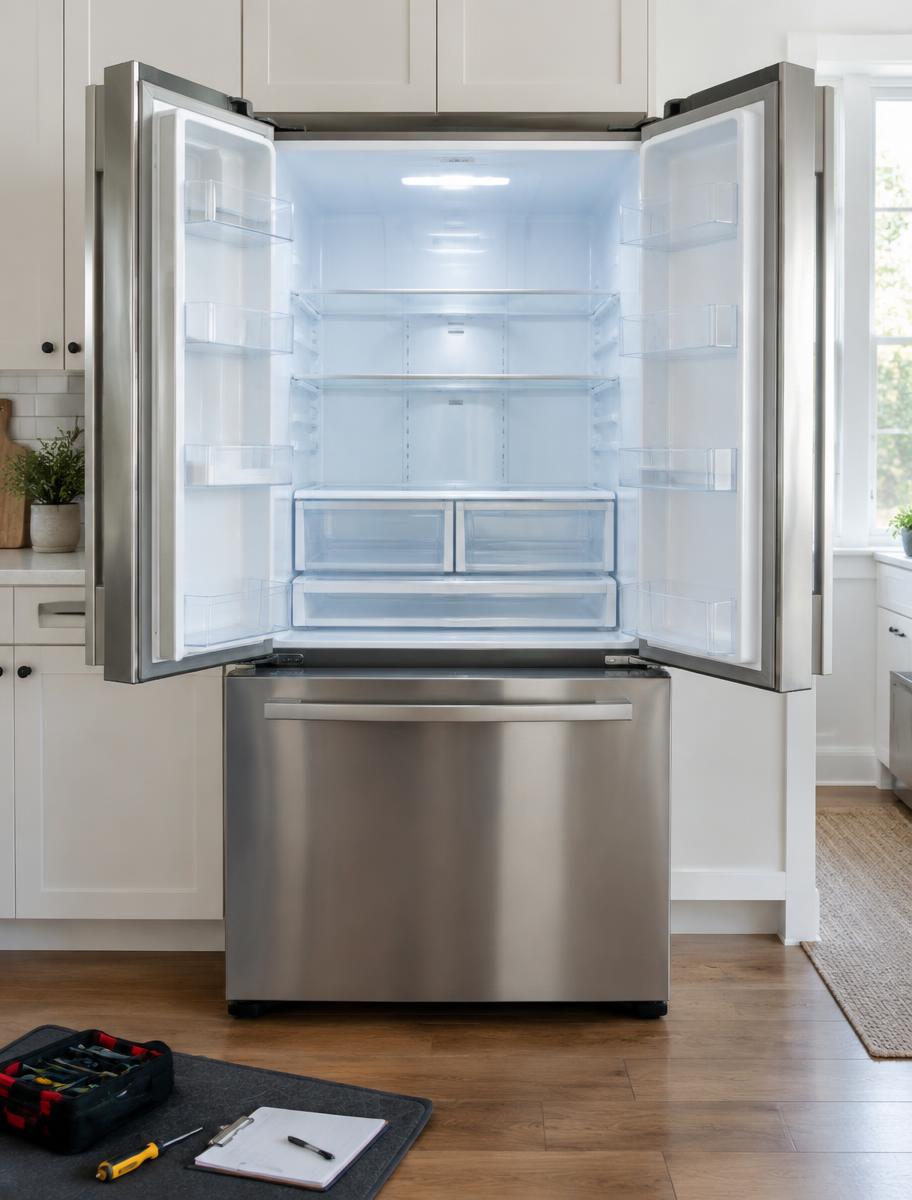
Water on the kitchen floor is easy to spot and easy to ignore — until it soaks into flooring or cabinets. Refrigerator leaks usually come from one of a handful of places, and knowing where to look helps you decide whether it is a quick fix or a job for a technician.
Find where the water starts
Dry the floor completely, then watch it over the next few hours. Water that appears at the front center often comes from a drain pan or defrost drain. Water at the back or along one side is more likely to come from the water supply line feeding the ice maker or dispenser. Water inside the fresh-food compartment, usually under the crisper drawers, points to a clogged defrost drain.
Clogged defrost drain
During normal defrost cycles, melted frost runs down a small drain to a pan under the unit, where it evaporates. Food particles or ice can block that drain, sending water into the compartment and eventually onto the floor. In humid climates like ours, defrost cycles handle more moisture, so a partially blocked drain shows up quickly.
Repeated freezing of that drain can also hint at a defrost system problem — the same issue that causes refrigerators to stop cooling.
Water supply and ice maker lines
Refrigerators with ice makers or water dispensers connect to a household water line. Loose fittings, cracked plastic tubing, or a failing inlet valve can cause slow leaks behind the unit. If you see water near the back, turn off the supply valve and check the connection. A kinked or brittle line should be replaced rather than taped.
- Check the shut-off valve and fitting behind the refrigerator.
- Look for drips at the ice maker fill tube in the freezer.
- Inspect the filter housing if your model has an internal water filter.
Drain pan and door seals
A cracked or misaligned drain pan can let defrost water escape. Worn door gaskets let warm, humid air in, which creates extra condensation that ends up as water where it should not be. If you notice sweating on the outside of the doors, the seals deserve a closer look.
When to schedule service
If the leak continues after cleaning the drain and checking the lines, or if it comes with frost buildup, noise, or temperature changes, it is time for professional refrigerator repair. Leaks paired with a dishwasher issue nearby can also be confusing — it is worth confirming which appliance the water is coming from before assuming.
Ready to have it looked at? Request service with your brand, model, and what you are seeing.
Still not working?
Call (850) 755-9600 or send the brand, model, and what the appliance is doing.