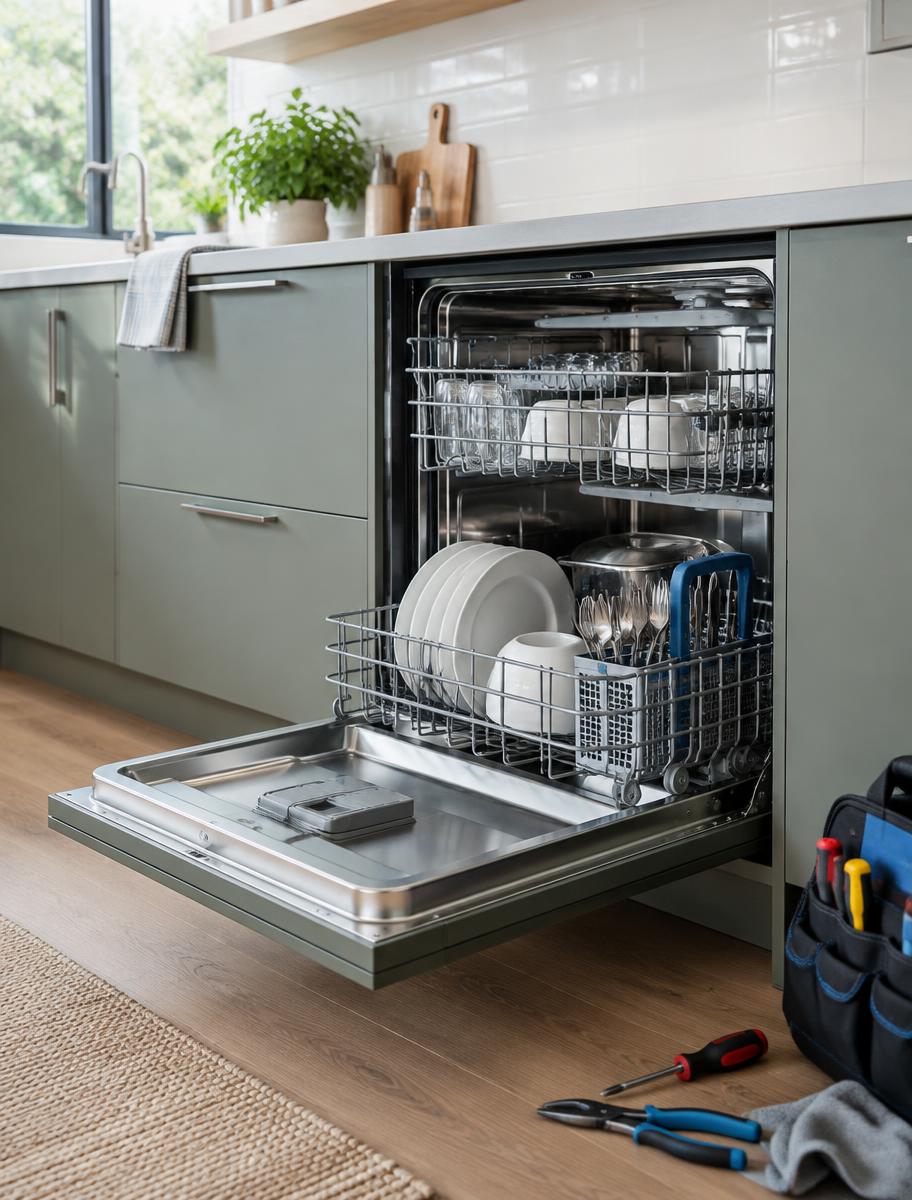
A puddle at the bottom of the dishwasher after a cycle is one of the most common kitchen appliance complaints. The good news: many causes are simple blockages you can check yourself. The rest involve the pump or controls and are best handled with a proper diagnosis.
Clean the filter
Most modern dishwashers have a removable filter under the lower spray arm. Food debris, labels, and broken glass collect there. Twist it out, rinse it under warm water with a soft brush, and reinstall it firmly. A dirty filter also causes dishes to come out gritty, so this one step often fixes two problems.
Check the garbage disposal connection
If your dishwasher drains through the disposal, run the disposal before starting a cycle. After a new disposal is installed, the knockout plug on the dishwasher inlet sometimes gets left in place — a classic cause of a brand-new drain problem.
Look at the drain hose and air gap
Under the sink, follow the drain hose from the dishwasher. Kinks, sags, or clogs can stop water from leaving. If your sink has an air gap cap on the countertop, remove the cover and clear any debris inside.
Pump and control problems
If the filter and hose are clear and you hear humming without draining, the drain pump or its impeller may be blocked or failing. Some dishwashers also use a check valve that can stick. These are internal repairs that call for dishwasher repair.
Don't ignore leaks
Standing water sometimes comes with water on the floor. A worn door seal or a failing inlet valve can leak slowly under cabinets, where damage goes unnoticed. If the leak is near your refrigerator, confirm the source — our refrigerator leak guide covers how to tell.
Have questions about scheduling or what to expect? Visit our FAQ or request service.
Still not working?
Call (850) 755-9600 or send the brand, model, and what the appliance is doing.